---
title: "Artifacts, once again"
subtitle: "Why is it so urgent to read and write about technological artifacts today?"
author: "Lorenzo Ancona"
date: 2024-09-10
language: en
words: 1333
canonical: https://artifactstech.substack.com/p/artifacts-once-again
license: CC BY 4.0
cite_as: "Artifacts, once again by Lorenzo Ancona, Artifacts, 2024-09-10. https://artifactstech.substack.com/p/artifacts-once-again (CC BY 4.0)"
---
# Artifacts, once again
\[For my Italian friends\]
I have to admit, this might be one of the toughest Artifacts I’ve ever written.
Not because we’re making a leap from Dante’s language to Shakespeare’s.
It’s more about the challenge of speaking to both longtime subscribers, who know Artifacts inside out, and those of you who are just stepping aboard (welcome, by the way).
Now, I don’t want to rehash what this newsletter is about—that would be mind-numbing. But at the same time, I can’t skip over the basics of what I’m doing here, why it matters, and who it’s for.
After mulling this over for hours, I came to a question I first needed to answer for myself:
Why is reflecting, writing, and discussing technological artifacts not just idle speculation, but something urgent today?
In other words, why should anyone subscribe to and read this newsletter?
The answer are two simple lines, that I try to unfold below.
 Keep reading to fill this in
Your comments, thoughts, and critiques aren’t just appreciated—they’re what will make this newsletter even more valuable.
And if you’re ready to trust Artifacts, just hit the button below :)
> ### The Answer
With the term “artifacts”, I’m casting a wide net: it covers everything from physical devices (like the latest iPhone) to AI tools, online platforms, websites, digital services, self-driving cars—you name it.
In short, anything born of technical expertise, often connected to the internet, and helping define what we now think of as our digital society and life.
But more importantly, these artifacts are the tools that—whether we realise it or not—shape our daily existence. They mediate our interactions and have woven themselves so deeply into our lives that they’re almost invisible or granted (think of your phone).
As straightforward as it may seem, we can’t afford to be passive about these artifacts or assume they just happen to us by chance.
If a technology produces a certain effect, it’s because someone designed (or misdesigned) it to do just that. Again, we can’t ignore that.
------------------------------------------------------------------------
Since the days when Homo habilis crafted the first tools—probably weapons for hunting—artifacts have embodied specific beliefs, intentions, and a clear view of the world.
Creating technology isn’t just some side note in human history—it’s what has, in many ways, made us more human. Reid Hoffman would likely back me up on that.
But with that power comes responsibility. As Winston Churchill sharply put it, “We shape our buildings, and thereafter they shape us.” He was talking about palaces, but those are just another form of technology—another artifact.
 A building, drawn by Flux
The bottom line to this? We ought to think through how technologies are built to understand why and how they mediate and shape our lives in a certain direction. But also to react and give technologies the shape we aim for.
That’s why it’s crucial to push back on the tired claim that “technology is neutral—it’s all about how you use it.”
No, that’s completely misguided! And our two lines unfold right from here.
> #### Two lines
The design of any technological artifact is infused with values and political structures long before it even reaches the user. This is what Langdon Winner, the godfather of this newsletter, argued when he examined the low-hanging bridges in Long Island designed to keep Black people from reaching the beach.
Luciano Floridi echoes this, claiming there’s no such thing as neutral technology. The construction phase—the very design of any artifact—is shaped by various forces, and it’s on those designing to ensure the right values win out.
In that sense, design is a moral act, placing significant responsibility on us when we build and deliver something new.
Safety, ethics, and considerations like these can’t be an afterthought. They need to be woven into the design process from the beginning. In other words, they must be considered by design throughout the design phase.
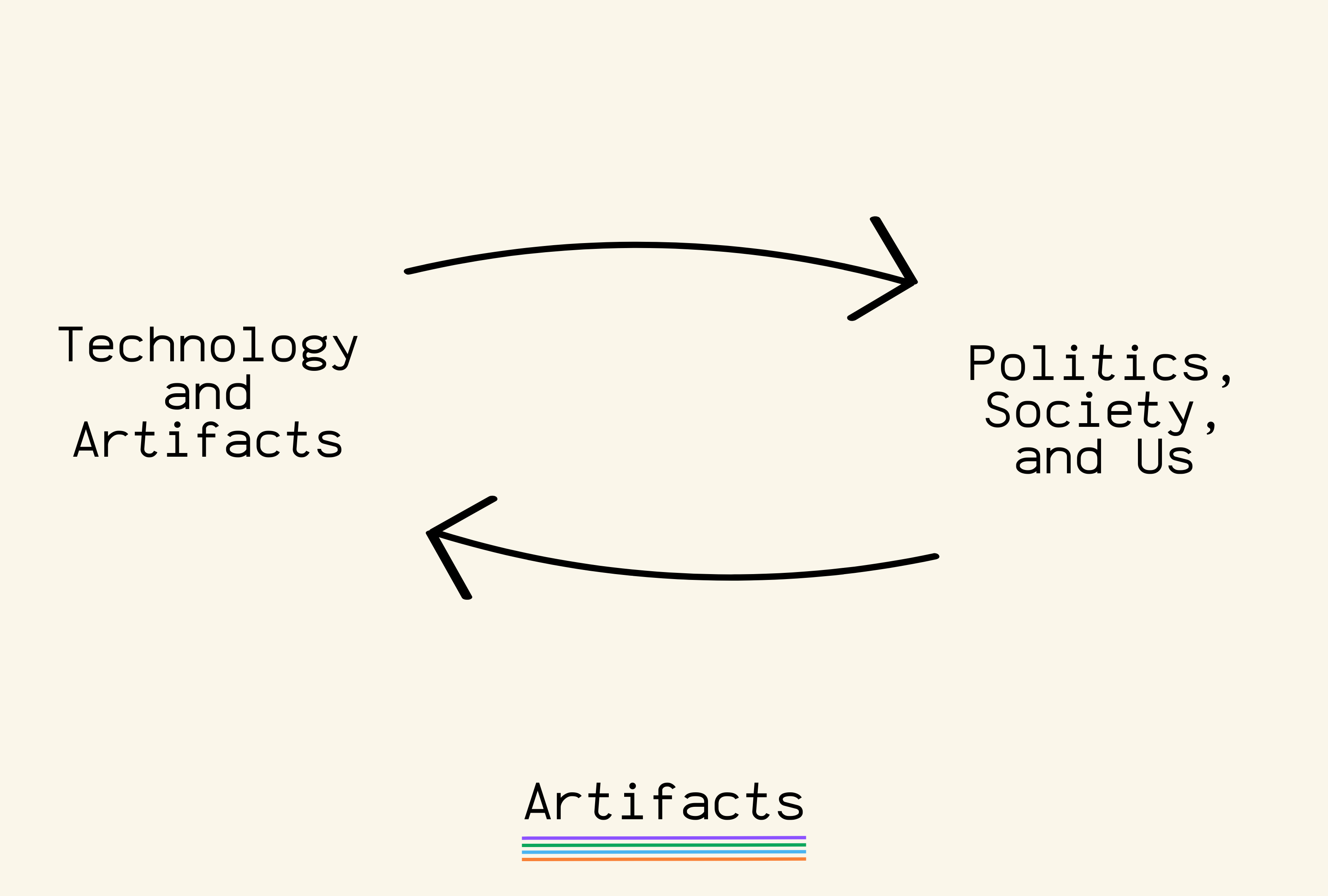
And that’s the first line Artifacts walks — moving from technology to us, politics, and society.
------------------------------------------------------------------------
But, of course, this isn’t always possible. Some technologies are already out in the world, and we can’t just send them back to the factory or rebuild them from scratch. This is exactly where politics, policies, and regulations come into play.
Not as roadblocks to innovation, as many claim. Rather, they serve to guide technology toward what we collectively define as good.
A prime example of this is the European Union’s Digital Markets Act, which compels online services to revisit their interfaces—essentially requiring a redesign to address what went wrong the first time.
Now, let’s be clear: I’m not suggesting tech policies and regulations are just second-chance efforts. While they may have functioned that way in the past, well-crafted rules can do more than clean up the mess—they can shape how future technologies are built from the outset. The AI Act might be a proving ground for this, but we’ll have to wait and see.
And that’s the second, other line of Artifacts—this time, moving from politics to technology.
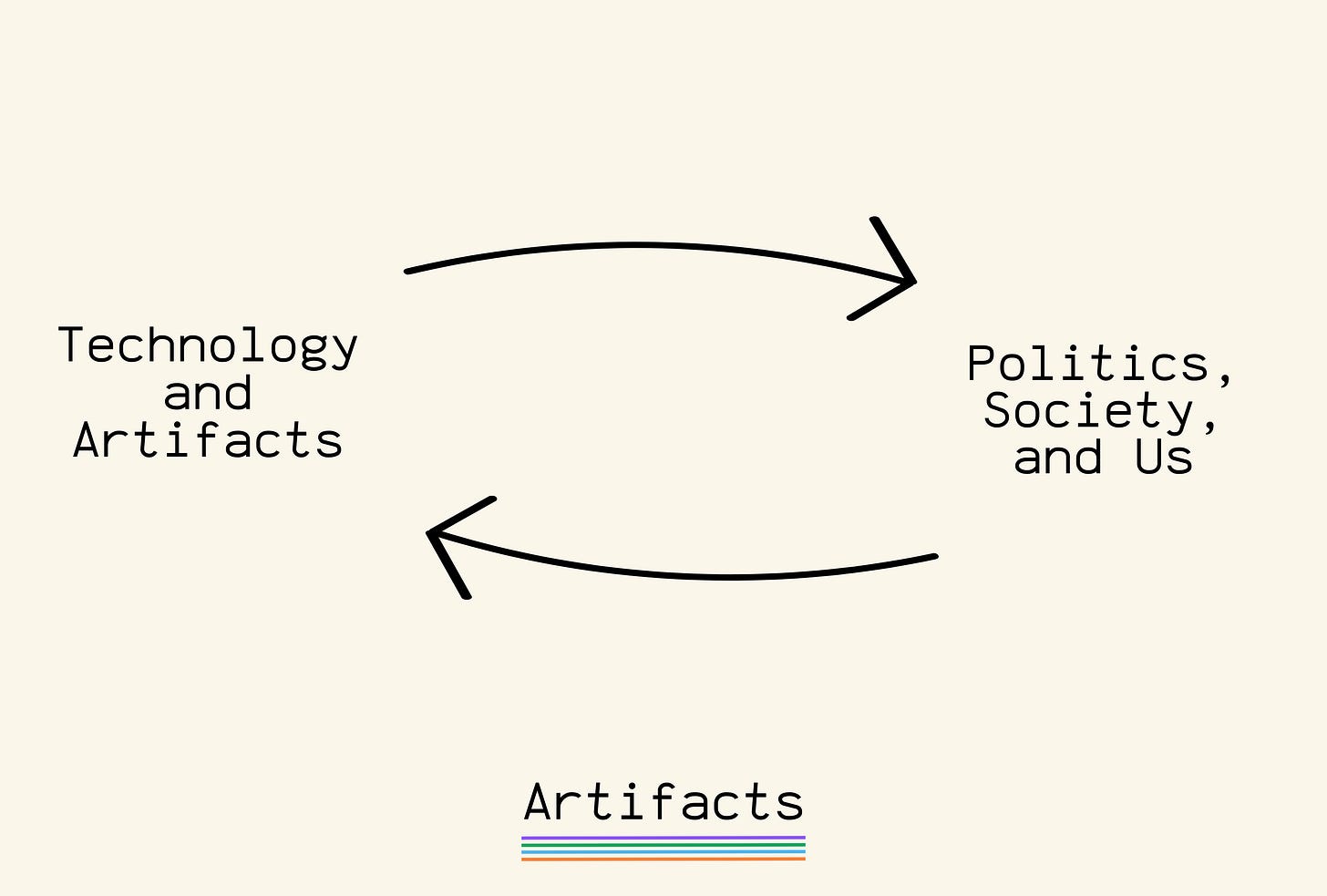 Promise kept
In the end, it often comes down to design, whether we’re talking about the artifacts themselves or the regulations governing them. And I find it fascinating that the same word—design—can stretch to cover both.
> #### So, what?
I’ve probably said enough by now. Hopefully, it’s clear why talking about artifacts isn’t just some niche obsession for tech nerds—it’s an urgent priority for us all.
We’ll be diving deep into artifacts here in Artifacts. This will be a space, a playground, to bring together facts, ideas, and reflections on how these technologies have been, and continue to be, shaping us.
And just as importantly, we’ll explore how politics and institutions are grappling with the meaning of technology.
We’ll do this every other Tuesday. Most of the time, I’ll be sharing my thoughts, but we’ll also bring in technologists, policy experts, and other curious minds to join the conversation.
Each edition of Artifacts will follow the format you see here: a deep dive into a key topic, food for thought from different sources, a book recommendation, a quote from someone sharper than me, and a tool I’d suggest you try.
It’ll be a journey we take together, and I’m excited to kick it off, once again.
Thank you to everyone who’s joining us for the first time today, and to those who’ve been here from the beginning for your continued support.
> ### Save for Later
Everyone’s buzzing about “founder mode”—but what exactly is it?
Are we too paranoid about AI and elections? Or maybe we’re just too paranoid in general?
Telegram may be changing its mind about content moderation.
Wanna go open source? A good source for it.
I wish I could call Mark Scott a competitor. That’s not the case yet, but he’s out with a great, new newsletter.
🟢 Join the Artifacts Community on WhatsApp to get other Save for Later content!
> ### The Bookshelf
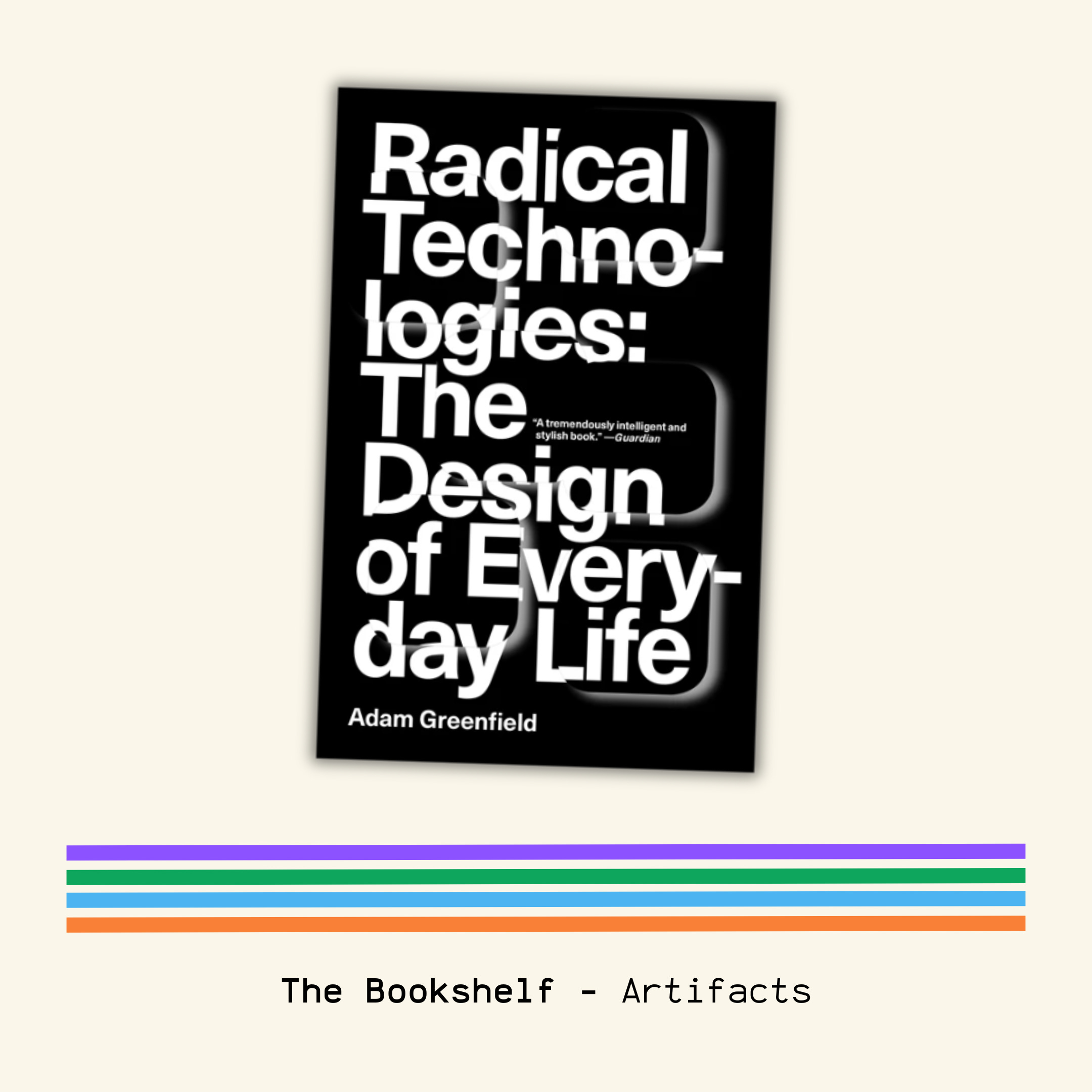
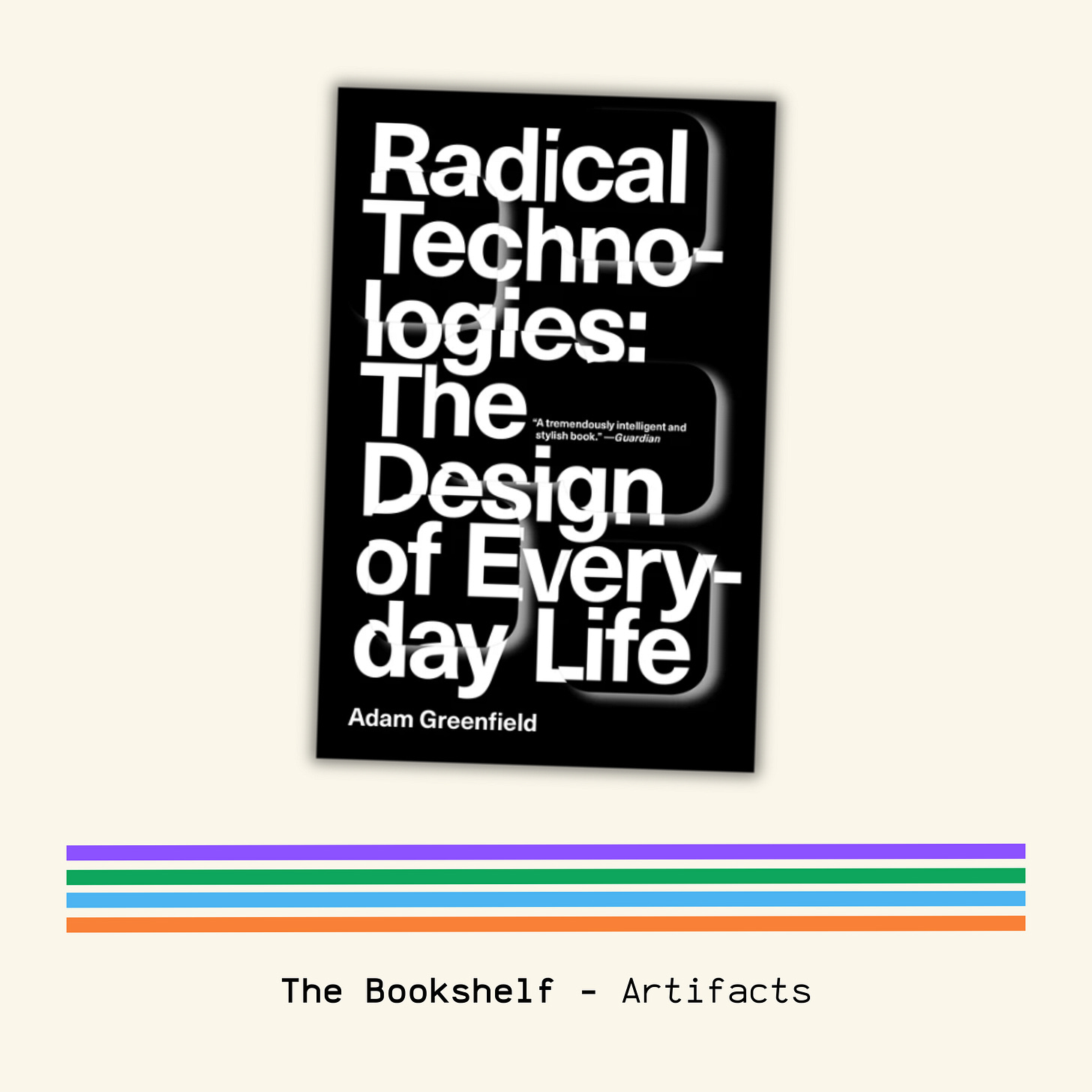 Fate is blind. I’m reading this right now: “Radical Technologies: The Design of Everyday life” a fascinating scrutiny and speculation of a set of different artifacts we encounter every day. I’m yet to finish it, but I can already tell it’s worth a read.
📚 All the books I’ve read and recommended in Artifacts are here.
> ### Someone said this before
“One has to become a cybernetician to remain a humanist.” - Peter Sloterdijk
> ### Nerding
 If you don’t want to miss this Artifacts or that mind-blowing article you just found, save it for later. Omnivore has got you covered—it saves articles and content, presenting them in a sleek, easy-to-read format.
> ### Catch-up?
If you want to know more about Artifacts, where it all started, or just want to connect...
Let's grab a virtual coffee ☕
 A building, drawn by Flux
The bottom line to this? We ought to think through how technologies are built to understand why and how they mediate and shape our lives in a certain direction. But also to react and give technologies the shape we aim for.
That’s why it’s crucial to push back on the tired claim that “technology is neutral—it’s all about how you use it.”
No, that’s completely misguided! And our two lines unfold right from here.
> #### Two lines
The design of any technological artifact is infused with values and political structures long before it even reaches the user. This is what Langdon Winner, the godfather of this newsletter, argued when he examined the low-hanging bridges in Long Island designed to keep Black people from reaching the beach.
Luciano Floridi echoes this, claiming there’s no such thing as neutral technology. The construction phase—the very design of any artifact—is shaped by various forces, and it’s on those designing to ensure the right values win out.
In that sense, design is a moral act, placing significant responsibility on us when we build and deliver something new.
Safety, ethics, and considerations like these can’t be an afterthought. They need to be woven into the design process from the beginning. In other words, they must be considered by design throughout the design phase.
And that’s the first line Artifacts walks — moving from technology to us, politics, and society.
------------------------------------------------------------------------
But, of course, this isn’t always possible. Some technologies are already out in the world, and we can’t just send them back to the factory or rebuild them from scratch. This is exactly where politics, policies, and regulations come into play.
Not as roadblocks to innovation, as many claim. Rather, they serve to guide technology toward what we collectively define as good.
A prime example of this is the European Union’s Digital Markets Act, which compels online services to revisit their interfaces—essentially requiring a redesign to address what went wrong the first time.
Now, let’s be clear: I’m not suggesting tech policies and regulations are just second-chance efforts. While they may have functioned that way in the past, well-crafted rules can do more than clean up the mess—they can shape how future technologies are built from the outset. The AI Act might be a proving ground for this, but we’ll have to wait and see.
And that’s the second, other line of Artifacts—this time, moving from politics to technology.
 Promise kept
In the end, it often comes down to design, whether we’re talking about the artifacts themselves or the regulations governing them. And I find it fascinating that the same word—design—can stretch to cover both.
> #### So, what?
I’ve probably said enough by now. Hopefully, it’s clear why talking about artifacts isn’t just some niche obsession for tech nerds—it’s an urgent priority for us all.
We’ll be diving deep into artifacts here in Artifacts. This will be a space, a playground, to bring together facts, ideas, and reflections on how these technologies have been, and continue to be, shaping us.
And just as importantly, we’ll explore how politics and institutions are grappling with the meaning of technology.
We’ll do this every other Tuesday. Most of the time, I’ll be sharing my thoughts, but we’ll also bring in technologists, policy experts, and other curious minds to join the conversation.
Each edition of Artifacts will follow the format you see here: a deep dive into a key topic, food for thought from different sources, a book recommendation, a quote from someone sharper than me, and a tool I’d suggest you try.
It’ll be a journey we take together, and I’m excited to kick it off, once again.
Thank you to everyone who’s joining us for the first time today, and to those who’ve been here from the beginning for your continued support.
> ### Save for Later
Everyone’s buzzing about “founder mode”—but what exactly is it?
Are we too paranoid about AI and elections? Or maybe we’re just too paranoid in general?
Telegram may be changing its mind about content moderation.
Wanna go open source? A good source for it.
I wish I could call Mark Scott a competitor. That’s not the case yet, but he’s out with a great, new newsletter.
🟢 Join the Artifacts Community on WhatsApp to get other Save for Later content!
> ### The Bookshelf
 Fate is blind. I’m reading this right now: “Radical Technologies: The Design of Everyday life” a fascinating scrutiny and speculation of a set of different artifacts we encounter every day. I’m yet to finish it, but I can already tell it’s worth a read.
📚 All the books I’ve read and recommended in Artifacts are here.
> ### Someone said this before
“One has to become a cybernetician to remain a humanist.” - Peter Sloterdijk
> ### Nerding
 If you don’t want to miss this Artifacts or that mind-blowing article you just found, save it for later. Omnivore has got you covered—it saves articles and content, presenting them in a sleek, easy-to-read format.
> ### Catch-up?
If you want to know more about Artifacts, where it all started, or just want to connect...
Let's grab a virtual coffee ☕