---
title: "As we speak"
subtitle: "With Gen AI now talking, what's next for us, content, and intelligence?"
author: "Lorenzo Ancona"
date: 2024-10-08
language: en
words: 1161
canonical: https://artifactstech.substack.com/p/as-we-speak
license: CC BY 4.0
cite_as: "As we speak by Lorenzo Ancona, Artifacts, 2024-10-08. https://artifactstech.substack.com/p/as-we-speak (CC BY 4.0)"
---
# As we speak
\[To read this in 🇮🇹\]
Take a minute (or two, or however long you want) to listen in—just click below or here. (I swear the newsletter will be shorter)
0:00-12:54
\[Embedded media — view original\]
It’s just a lady and a gentleman chatting about EU politics and party manifestos. They’re also big fan of Artifacts - lovely!
Except, here’s the kicker: these two don’t exist. The entire podcast? Completely AI-generated. And it took me less than three minutes to make it, for free.
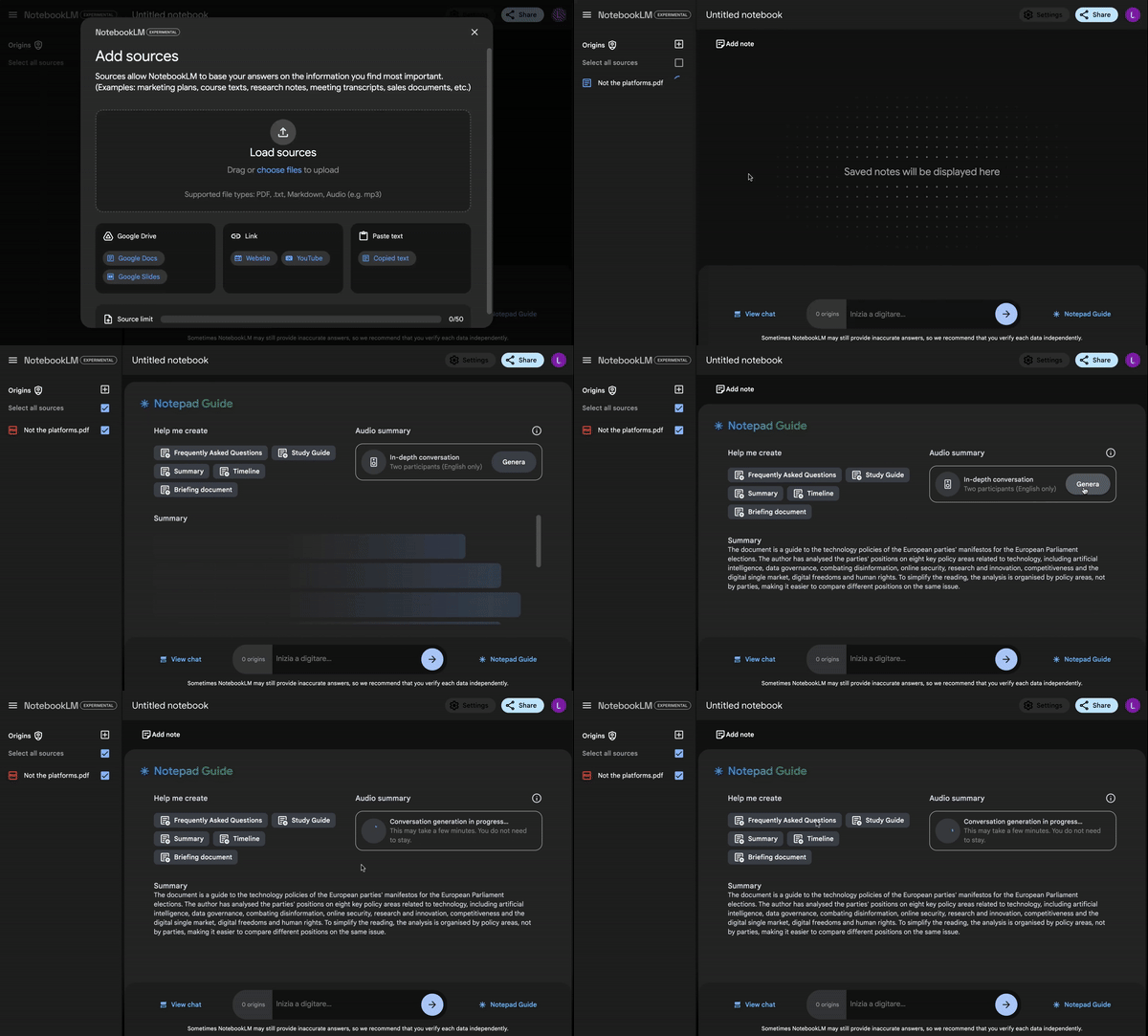
All I did was drag and drop a guide I wrote about the upcoming EU elections, and voilà—the AI did the rest.
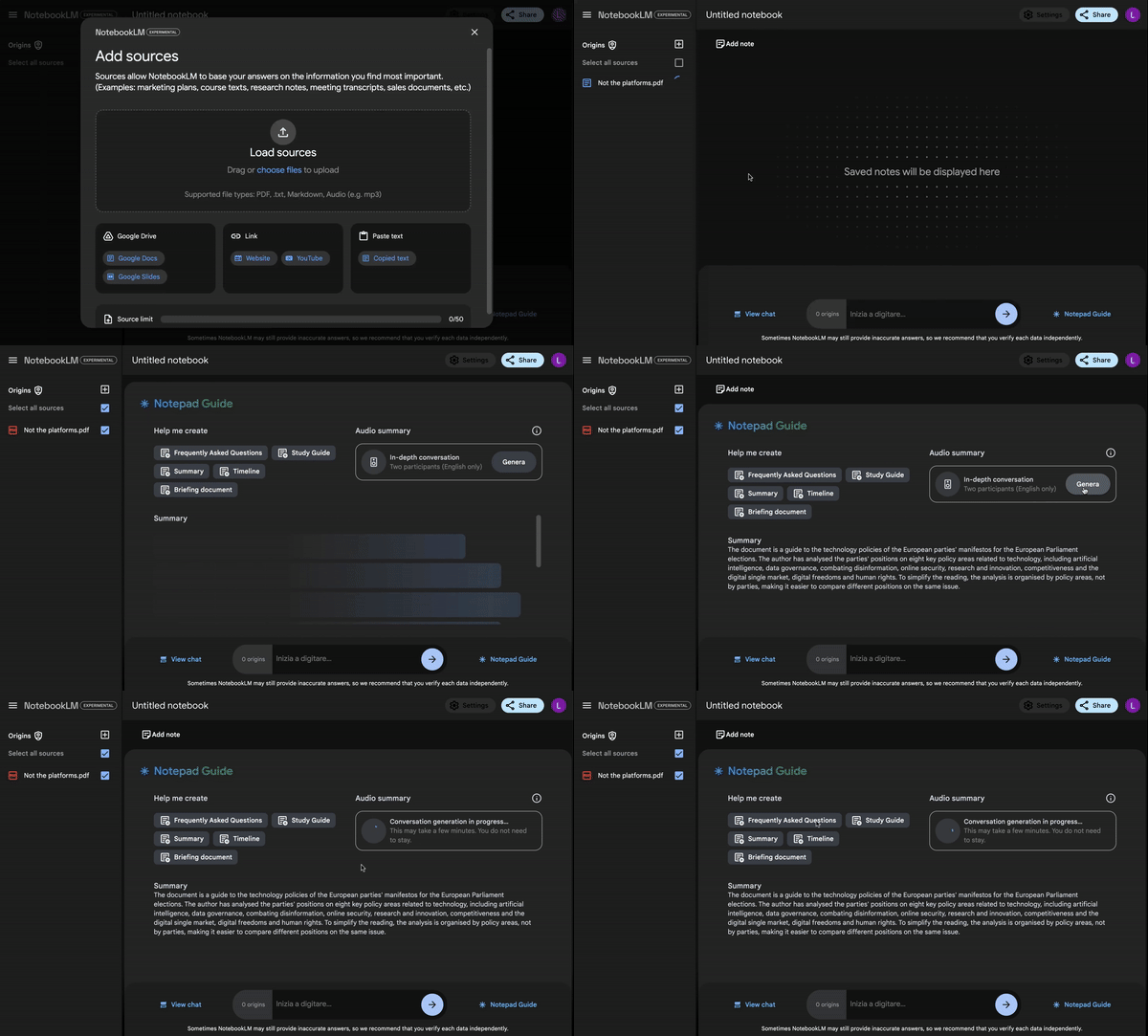 As simple as that
Now, what you hear are two eerily smooth voices having a conversation. They sound human, even throwing in a few attitude shifts depending on the topic.
As someone who actually wrote the guide, I can confirm they’re hitting all the right points. Sure, they get a bit superficial at times and lean a little too heavily on certain sections, but still—it’s shockingly accurate.
Yet, what strikes me is that this AI made my dry-as-dust EU election guide sound almost… fun.
And it didn’t require a single line of code, no complicated instructions, no need for tech or AI expertise. Just drop your content in, and bam, you’ve got a podcast.
------------------------------------------------------------------------
This is Google’s NotebookLM, the latest shiny AI toy from Big G to engage with any type of content and, as they claim, “go from information to insights”.
You upload your material, and it’ll spit out summaries, key points, outlines—basically anything that would’ve taken a student or intern hours.
Give it a whirl.
I remember the first time I used ChatGPT—that “wow” moment when I realized, okay, this is something. I’ve had similar moments with other AI tools over the years, and NotebookLM gave me that same feeling.
But here’s the thing: this isn’t just a “wow” moment. It’s a chance to take a step back and think about Gen AI and the hype, AI-generated content, and what it means for the future of information. And who (or what) is actually intelligent in all this?
That’s Artifacts for today—just a bit more aware that my future competition might be synthetic :)
> ### The Story
To make matters more ironic, the elections guide I uploaded was also partially AI-generated (or at least co-created) with Claude, as I mentioned back in June.
So, one AI helped draft the report, and another turned it into a podcast.
Does this mean machines are getting smarter? Well, not exactly.
One key takeaway here is that there’s no real intelligence at play. Rather, intelligence is in what we perceive and in our understanding, but not in the machines.
Let me break it down. Tools like ChatGPT, NotebookLM, and others don’t possess intelligence in the traditional sense. They rely on statistics and computation to process input and produce output.
But they don’t understand the content and what they’re processing, nor do they attach any meaning or emotion to it.
As Floridi brilliantly puts it, AI is “agency without intelligence”. In other terms, it’s something performing actions that would require intelligence (doing a podcast) without any actual intelligence to do so.
------------------------------------------------------------------------
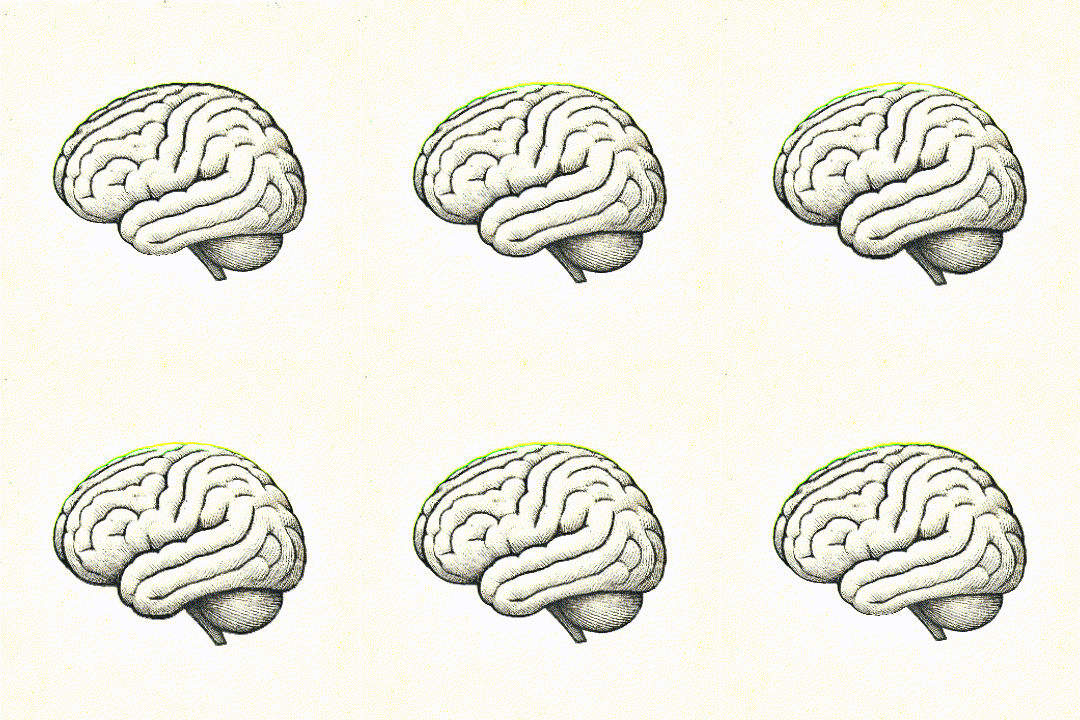
So, where is the intelligence? It’s in our perception of the text, audio, or images produced as the final output. We associate intelligence with this because, traditionally, these kinds of outcomes have required human intellect. But that’s not what’s happening in the process itself.
 Now, someone might ask, “So what? Isn’t the output what really matters?” Well, that’s debatable. Think of any work of art or human creation—we value not just the finished piece, but also the process, the intention, the creativity behind it.
The painter at work is just as important as the final painting.
This isn’t to dismiss AI, which clearly generates impressive outputs. But it’s key to remember that “What algorithms \[and AI\] are reproducing is not the intelligence of people but the informativity of communication.”
Again, AI excels at creating content bearing information value, like the podcast you heard. But it’s an artificial form of communication rather than intelligence.
We need to be mindful of this distinction so we don’t overstate what these tools are really doing.
------------------------------------------------------------------------
Still, even though the processes lack intelligence, the results are increasingly indistinguishable from what humans can produce. And that’s something we have to sit with.
This shift, in my view, has two major implications:
1. Mediocrity is at stake. AI-generated content can match the quality of low to mid-tier content, and it’s faster and cheaper to produce. But if mediocrity becomes unacceptable, how will one push the boundaries to grow toward excellence? It’s an open question.
2. We’re facing a flood of content. Social media already boosted content creation and sharing. GenAI is about to supercharge that—making it easier, quicker, and more accessible for anyone to generate and share on-demand content.
This will create a synthetic internet, where more and more content is machine-generated, yet strikingly similar to what humans used to make.
As discouraging or even threatening as this might seem to those passionate about content creation, I still believe that human processes—intelligence, passion, and creativity—will remain valuable.
Even if, at first glance, mediocre content from a human and a machine will look almost indistinguishable. And this is already playing out, as we speak.
Leave a comment
> ### Save for Later
Schools are being flooded with AI bad content as well. And no, it’s not just bullshit papers.
OpenAI is, in the end, another tech company.
Elon Musk being, well, Elon Musk. Five days of that might be enough.
The Internet is dying because of AI? Or maybe social media will get better with no humans.
Why do we need some uncertainty?
\[Certainly uncertain: navigating risk and probability with Sir David Spiegelhalter\]
What would the Federalist Papers say if they were written in the 21st Century?
What are we really doing when we build things? This one’s bound to land on your favourites list.
\[Embedded media — view original\]
> ### The Bookshelf
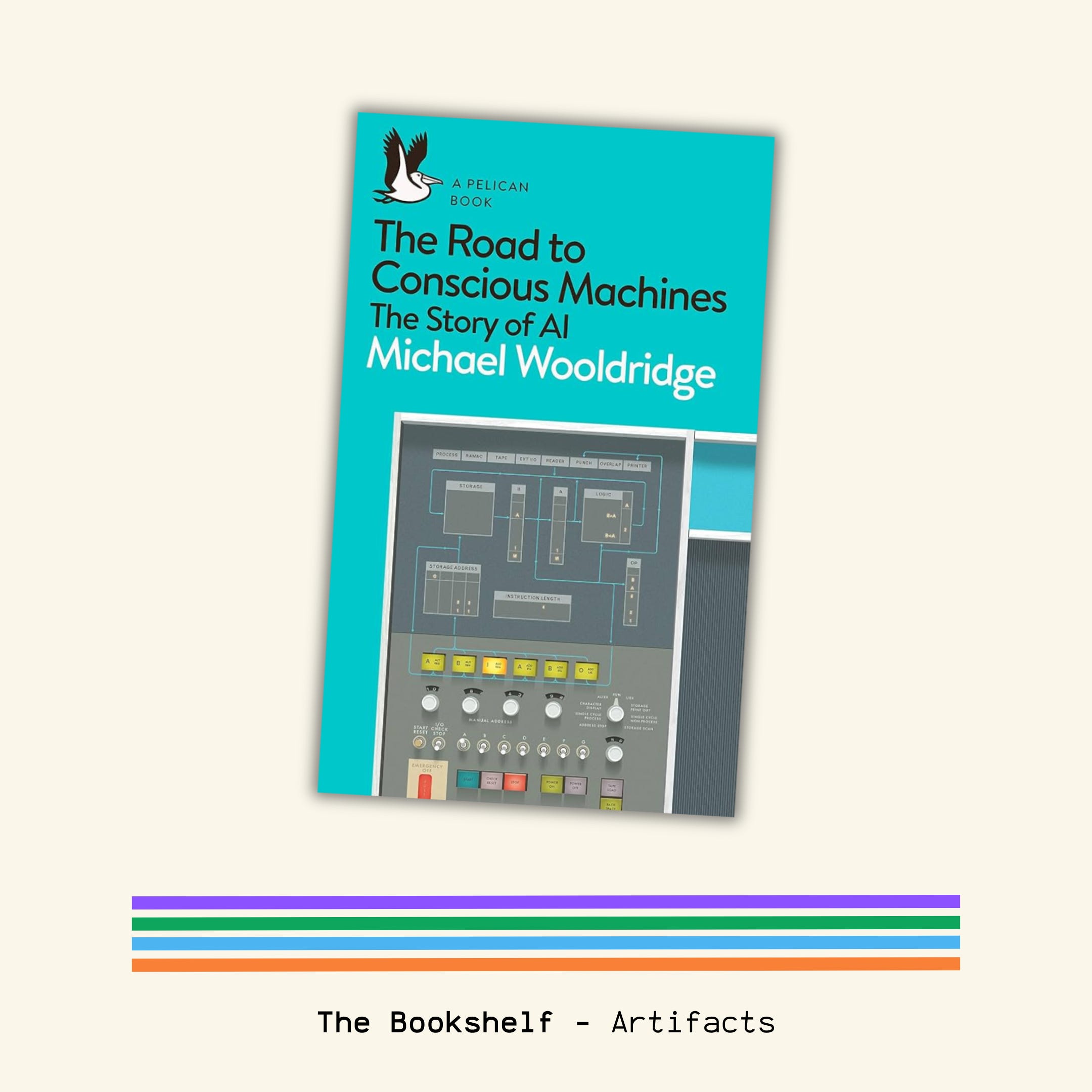
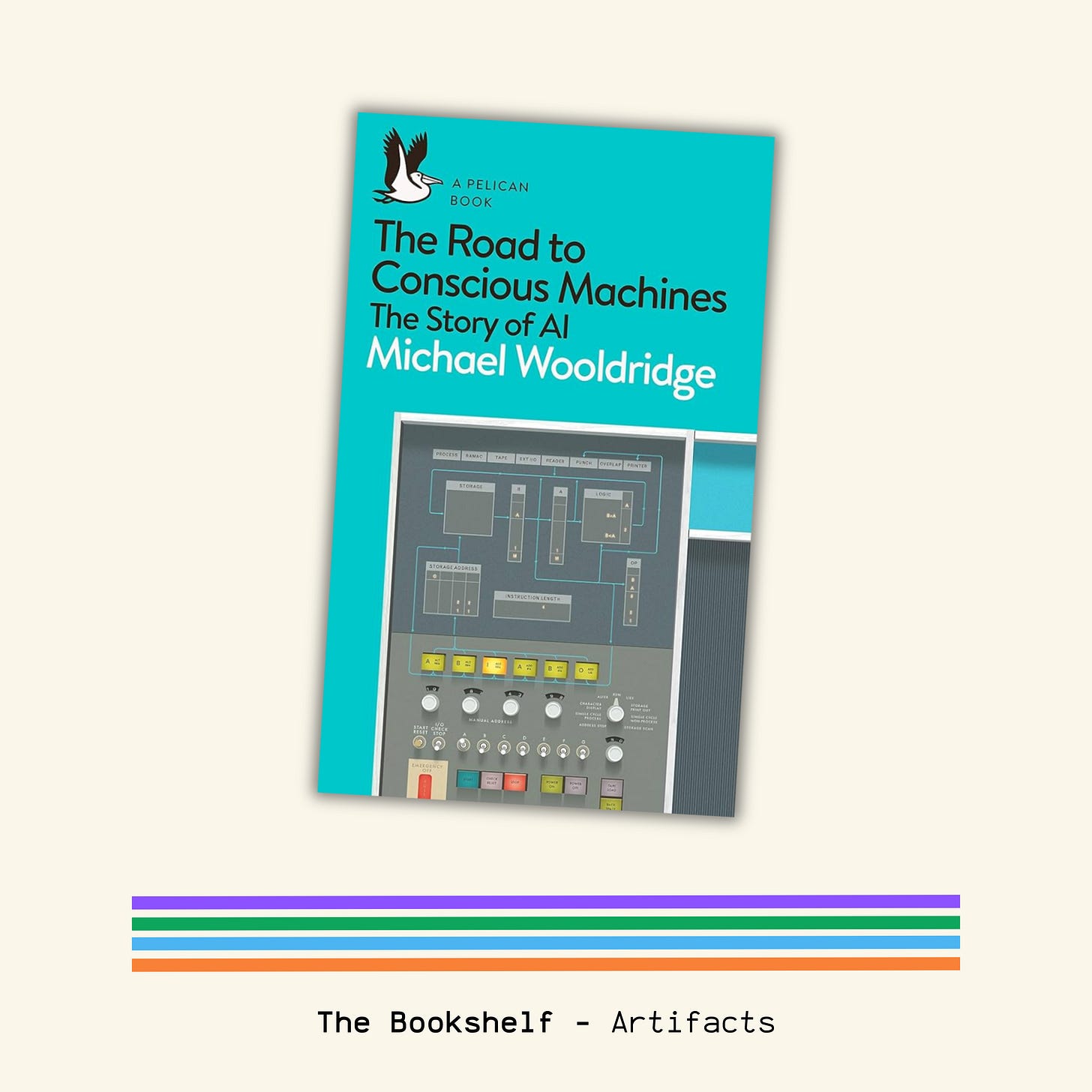 A super technical deep dive into how the whole AI story has unfolded—but surprisingly enjoyable to read! Despite all the intricate details, it’s packed with valuable insights and keeps you hooked the whole way through.
📚 All the books I’ve read and recommended in Artifacts are collected here.
> ### Someone said this before
“Simplicity is complexity solved” - the nerd guy I linked above :)
> ### Nerding
 Well, I’ve told you enough about NotebookLM. Give it a try and let me know whether it’s ‘wow’ or not!
> ### ☕?
If you want to know more about Artifacts, where it all started, or just want to connect...
Let's grab a virtual coffee ☕
 Now, someone might ask, “So what? Isn’t the output what really matters?” Well, that’s debatable. Think of any work of art or human creation—we value not just the finished piece, but also the process, the intention, the creativity behind it.
The painter at work is just as important as the final painting.
This isn’t to dismiss AI, which clearly generates impressive outputs. But it’s key to remember that “What algorithms \[and AI\] are reproducing is not the intelligence of people but the informativity of communication.”
Again, AI excels at creating content bearing information value, like the podcast you heard. But it’s an artificial form of communication rather than intelligence.
We need to be mindful of this distinction so we don’t overstate what these tools are really doing.
------------------------------------------------------------------------
Still, even though the processes lack intelligence, the results are increasingly indistinguishable from what humans can produce. And that’s something we have to sit with.
This shift, in my view, has two major implications:
1. Mediocrity is at stake. AI-generated content can match the quality of low to mid-tier content, and it’s faster and cheaper to produce. But if mediocrity becomes unacceptable, how will one push the boundaries to grow toward excellence? It’s an open question.
2. We’re facing a flood of content. Social media already boosted content creation and sharing. GenAI is about to supercharge that—making it easier, quicker, and more accessible for anyone to generate and share on-demand content.
This will create a synthetic internet, where more and more content is machine-generated, yet strikingly similar to what humans used to make.
As discouraging or even threatening as this might seem to those passionate about content creation, I still believe that human processes—intelligence, passion, and creativity—will remain valuable.
Even if, at first glance, mediocre content from a human and a machine will look almost indistinguishable. And this is already playing out, as we speak.
Leave a comment
> ### Save for Later
Schools are being flooded with AI bad content as well. And no, it’s not just bullshit papers.
OpenAI is, in the end, another tech company.
Elon Musk being, well, Elon Musk. Five days of that might be enough.
The Internet is dying because of AI? Or maybe social media will get better with no humans.
Why do we need some uncertainty?
\[Certainly uncertain: navigating risk and probability with Sir David Spiegelhalter\]
What would the Federalist Papers say if they were written in the 21st Century?
What are we really doing when we build things? This one’s bound to land on your favourites list.
\[Embedded media — view original\]
> ### The Bookshelf
 A super technical deep dive into how the whole AI story has unfolded—but surprisingly enjoyable to read! Despite all the intricate details, it’s packed with valuable insights and keeps you hooked the whole way through.
📚 All the books I’ve read and recommended in Artifacts are collected here.
> ### Someone said this before
“Simplicity is complexity solved” - the nerd guy I linked above :)
> ### Nerding
 Well, I’ve told you enough about NotebookLM. Give it a try and let me know whether it’s ‘wow’ or not!
> ### ☕?
If you want to know more about Artifacts, where it all started, or just want to connect...
Let's grab a virtual coffee ☕